Blind, experienced and unapologetically political: Tony Clark’s mayoral moment in Hepburn shire
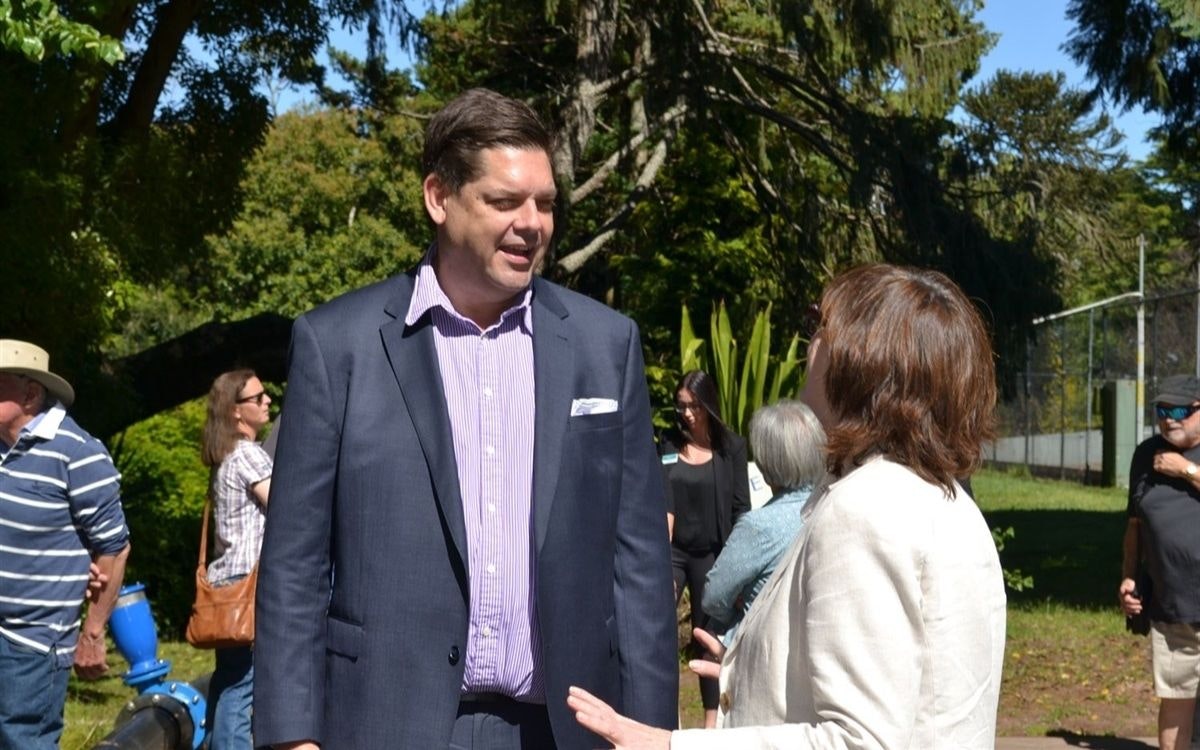
Tony Clark’s election as mayor of Hepburn shire is a powerful example of disability representation in action, challenging assumptions about leadership, visibility and who belongs at decision-making tables in local government.
Tony Clark’s elevation to mayor of Hepburn Shire Council is not just another local government leadership story – it’s a moment of representation that cuts straight to the core of what inclusion should actually look like in Australia.
Clark, who was elected to Hepburn Shire Council in the 2024 local elections, has been chosen by his fellow councillors to serve as mayor for a 12-month term beginning late last year. His colleagues’ vote of confidence puts a person with lived experience of blindness at the head of a municipal council, a rare occurrence in Australian public life.
He joins the long list of Australian decision-makers with disability – but that list is short. Clark himself highlighted this in a local interview, noting that since Australia’s federation in 1901, only about 10 federal politicians with lived experience of disability have been elected nationally.
Seeing the community from experience
Clark was legally blind by age 20. Long before entering local politics, he built a significant career in advocacy and leadership. He has held executive roles in the not-for-profit sector, including with Vision Australia, and senior positions within Victorian state government. His skill set spans communication, community engagement and governance – experience that many councillors lack, blind or not.
That lived experience is precisely what Clark says informs his approach to public service. He doesn’t shy away from stating that visibility matters: not because disability alone defines a leader’s capacity, but because the diversity of perspectives at decision-making tables still has a long way to go. “We talk about equity and meaningful inclusion,” he has said, “yet at our base level in politics where decisions are made, there is still such a gap.”
Clark has also been clear that his sights are set on local impact, not political ambition at higher levels. Though he once ran for federal parliament – with the cheeky slogan ‘No sight, great vision’ – he says now that heavy workload and the realities of federal politics aren’t for him.
Leadership that listens
Clark’s priorities for his mayoral year are rooted in connection and collaboration. His stated focus has been on listening to residents, strengthening community trust and building partnerships across government and business.
In his first few weeks as mayor, Clark was enthusiastic about community engagement, calling on residents to participate in shaping Hepburn’s future. He emphasised that his role is not about leading from one exclusive vantage point, but about catalysing collective action across the Shire’s towns and landscapes.
More than a milestone
This moment for Clark is more than a nice footnote in local government history – it is a practical example of what inclusion looks like when lived experience is respected as expertise. In communities across Australia, people with disability are still systematically underrepresented in elected office. Clark’s election as mayor – backed by his experience, competence, and relationships – challenges the myth that disability equals limitation.
For many in the disability sector, his leadership will be watched not as an oddity, but as an indicator of what broader democratic representation can achieve when barriers – social, structural and perceptual – are actively dismantled.