Is the Australian Open suitable for people with a disability to attend?
Is the Australian Open suitable for people with a disability to attend? This article explores accessibility at Melbourne Park, including seating, transport, sensory supports, and on-site assistance, and examines where the event performs well and where disabled attendees still face challenges.
The Australian Open is often described as one of the most progressive major sporting events in the world. But when it comes to accessibility, marketing claims only go so far. The real question is whether people with a disability can attend the Australian Open comfortably, independently, and without unnecessary stress.
The short answer: yes, the Australian Open is accessible, but suitability depends on planning, support needs, and the type of disability involved.
Accessibility at Melbourne Park: what’s officially provided
Melbourne Park has been designed to meet modern accessibility standards, and Tennis Australia has expanded its disability access services in recent years. Across the precinct, visitors will find step-free pathways, ramps, lifts, wide entry gates, and accessible toilets.
All main entrances offer priority access lanes for people with disability, and the major arenas – Rod Laver Arena, Margaret Court Arena, and John Cain Arena – include a range of accessible seating options. These include wheelchair seating, ease-of-access seating for people with limited mobility, enhanced vision seating for blind or low-vision patrons, and seating near hearing loops for people who are deaf or hard of hearing.
From an infrastructure perspective, the foundations are solid.
Accessible seating and ticketing: better than most, still limited
The Australian Open now offers an Accessibility Pre-sale, allowing people with disability to book suitable seating before general ticket sales open. Companion Card holders are supported, with companion seating located next to accessible bays when booked correctly.
However, availability can be limited for high-demand sessions, and ticket changes are not always flexible once bookings are confirmed. For popular matches, accessible seating can sell out quickly, meaning suitability may come down to how early and strategically you plan.
Getting there and moving around the precinct
Public transport access is one of the Australian Open’s strengths. Trams and trains servicing Melbourne Park are largely accessible, and extra services operate during the tournament. That said, accessible parking is limited and fills fast, and drop-off zones can be confusing for first-time visitors.
Once inside the precinct, the scale of the event becomes the biggest challenge. Courts, food outlets, and amenities are spread across a large area. On busy days, crowd density can make movement slow and tiring, particularly for wheelchair users, people using mobility aids, or those managing fatigue or pain conditions.
The site may be accessible in design, but crowd flow isn’t always disability-friendly in practice.
Sensory accessibility and communication support
The Australian Open has taken visible steps to improve sensory accessibility. The precinct includes dedicated sensory rooms, complimentary sensory kits, communication boards at information points, hearing loops in key venues, and live captions displayed on screens around Melbourne Park.
These features place the Australian Open ahead of many large sporting events. However, the tournament is still loud, busy, and visually stimulating by nature. Music, flashing lights, sponsor activations, and crowd noise are constant, and genuinely quiet spaces outside designated sensory rooms are limited.
For people with autism, sensory processing differences, or anxiety, the experience can be manageable — but rarely effortless.
On-site support and assistance services
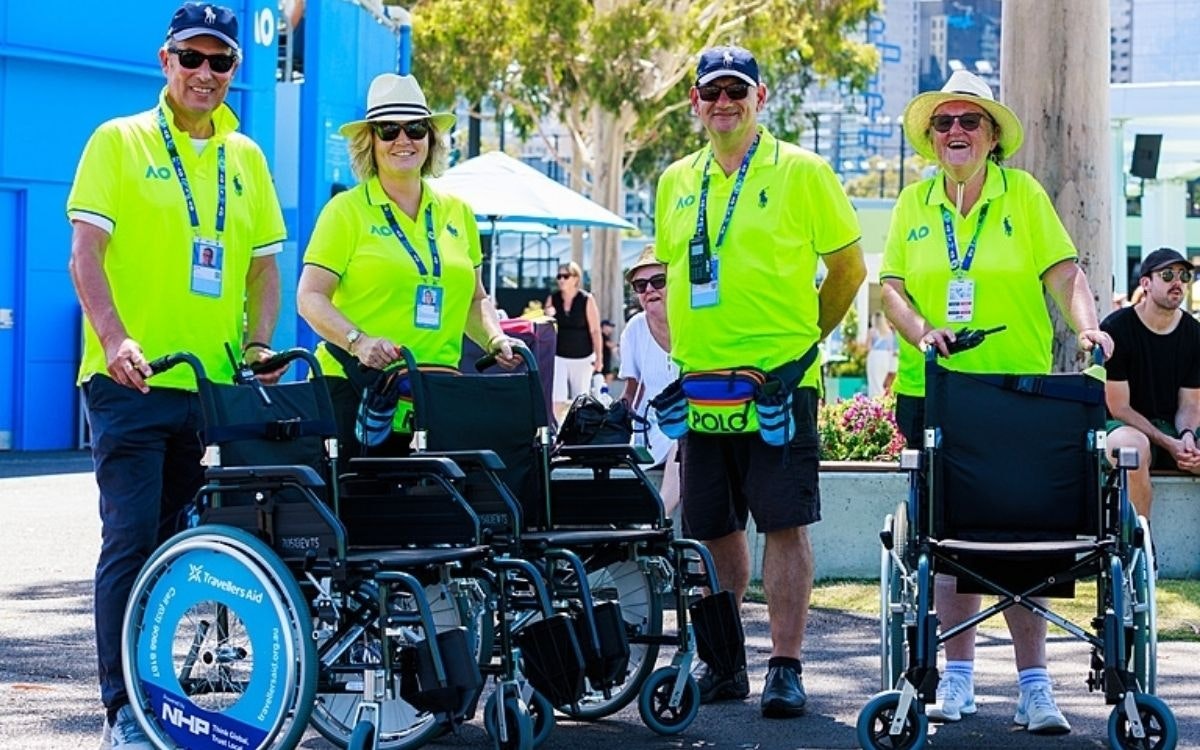
One of the strongest accessibility features at the Australian Open is its partnership with Travellers Aid. Volunteers provide assistance with navigation, transfers from transport hubs, wheelchair guidance, and general wayfinding support around the precinct.
For many disabled attendees, this service can make the difference between enjoying the day and being completely overwhelmed. The key caveat is awareness: these services work best when visitors know about them in advance and access them early.
Hidden disabilities and energy limits
People with invisible disabilities, such as chronic illness, chronic pain, fatigue conditions, or heat sensitivity, often face the greatest barriers.
While seating and toilets may be accessible, shade is inconsistent outside main arenas, queues can be long, and the expectation to remain on site for extended periods doesn’t align well with fluctuating capacity levels. Medical assistance is available, but peak-time delays are common.
In practical terms, the Australian Open assumes a level of physical and cognitive stamina that many disabled people simply don’t have.
Inclusion initiatives beyond compliance
The Australian Open has invested in disability inclusion beyond infrastructure, including adaptive tennis events and community programs such as All Abilities Day. These initiatives signal a broader cultural shift toward inclusion in sport, not just meeting minimum access standards.
While these programs don’t remove everyday barriers for all attendees, they do show intent to evolve.
The bottom line: accessible, but not effortless
So, is the Australian Open suitable for people with a disability to attend?
Yes, but with conditions.
It is one of the more accessible major sporting events in the world, with strong physical access, improving sensory supports, and genuine on-site assistance. But suitability still depends on advance planning, timing, crowd tolerance, and the ability to advocate for your own needs.
Right now, attending the Australian Open as a disabled person often requires more effort than it should. True accessibility isn’t just about ramps and seating, it’s about reducing fatigue, confusion, and stress.
The Australian Open isn’t perfect, but with continued focus on accessibility, it has the potential to set a genuine global benchmark for inclusive major sporting events.