What is Easy Read – and why it matters for inclusive organisations
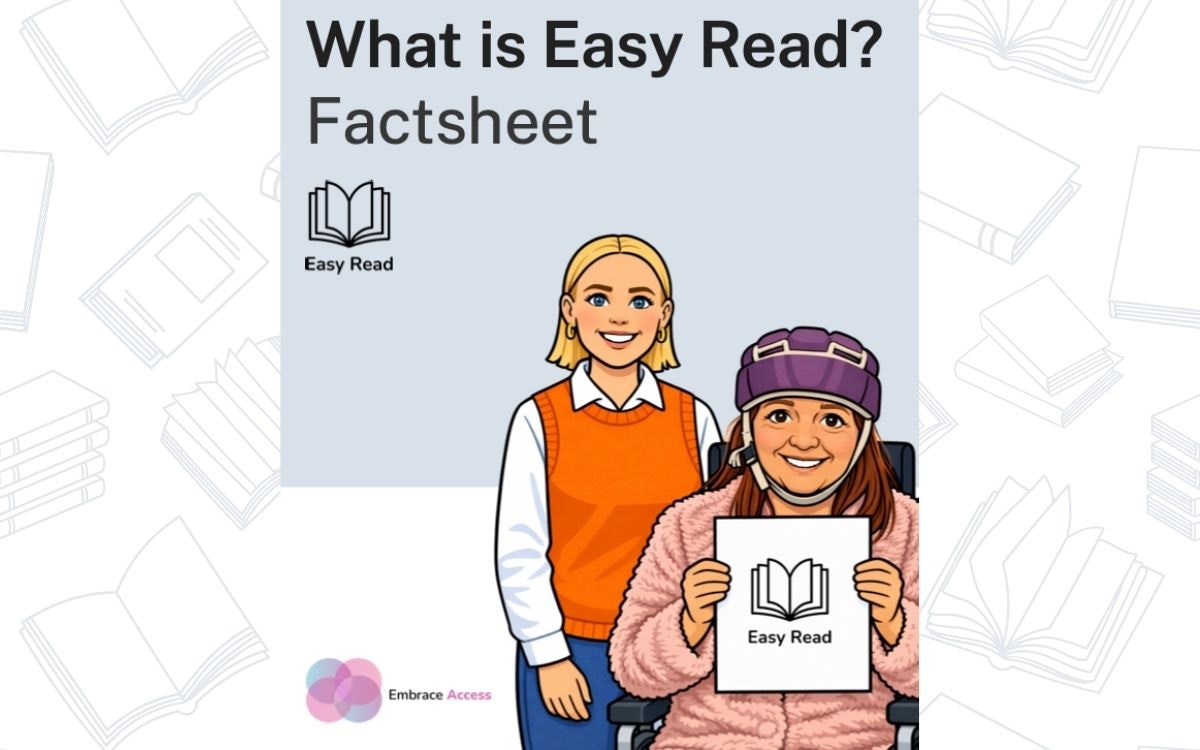
A co-designed Easy Read resource supporting organisations to understand what Easy Read is, who it is for, and when to use it. Learn how Easy Read fits within broader accessibility and inclusion strategies, supports Disability Action and Inclusion Plans, and helps organisations share information that more people can genuinely understand and use.
Across Australia, accessibility and inclusion work is maturing. Organisations are moving beyond surface-level compliance and starting to ask better, more meaningful questions. One topic that comes up again and again is Easy Read.
- What is it, really?
- Who is it for?
- When should it be used?
- And how does it fit into broader accessibility and inclusion strategies?
To support this growing curiosity – and to cut through some of the confusion – the Embrace Access team has co-designed a new, short resource: the What is Easy Read? factsheet.
This factsheet is designed to do one clear job: build shared understanding.
So, what is Easy Read?
Easy Read is a way of presenting information so it is easier to understand. It typically uses:
-
Plain language
-
Short sentences
-
Clear structure
-
Images that support the text
Easy Read is commonly used by people with intellectual disability, but it also supports many others. This includes people with cognitive disability, people who are neurodivergent, people with low literacy, people who speak English as an additional language, and people who are overwhelmed by complex systems and jargon. In other words, a lot of people.
Easy Read is not about “dumbing things down”. It is about making information usable.
Why understanding Easy Read matters
As organisations develop Disability Action and Inclusion Plans, accessibility frameworks and inclusion strategies, accessible information becomes a practical necessity, not a nice-to-have.
Without a clear understanding of Easy Read, organisations can fall into common traps:
-
Treating Easy Read as a one-off format instead of part of a broader communication approach
-
Commissioning resources that look accessible but don’t actually meet Easy Read principles
-
Assuming Easy Read replaces other accessibility measures (it doesn’t)
The What is Easy Read? factsheet explains where Easy Read fits, what it can and cannot do, and when it should be used. That clarity helps organisations make better decisions and spend their time and resources more effectively.
Inclusion shows up in information
Information is often the first point of contact people have with an organisation. Websites, forms, policies, service descriptions and public updates all send a message – intentionally or not – about who an organisation is designed for.
When information is inaccessible, it quietly excludes. When it is clear, usable and thoughtfully designed, it signals welcome.
Accessible information is not just a format. It is part of how organisations show who they are making space for.
A co-designed resource, made to be shared
This Easy Read factsheet was co-designed by the Embrace Access team, drawing on lived experience and professional expertise. It was created specifically to support organisations that care about inclusion, accessibility, customer experience and social impact.
It is short, practical and designed to be shared, internally with teams, and externally with partners and stakeholders. If you work with organisations that are trying to do better in this space, pass it on.
The more shared understanding we build, the stronger accessibility work becomes across sectors.
Click here to read the What is Easy Read? factsheet
Learn more
You can discover explore more resources at www.embraceaccess.com.au
Because real inclusion starts with information people can genuinely use.